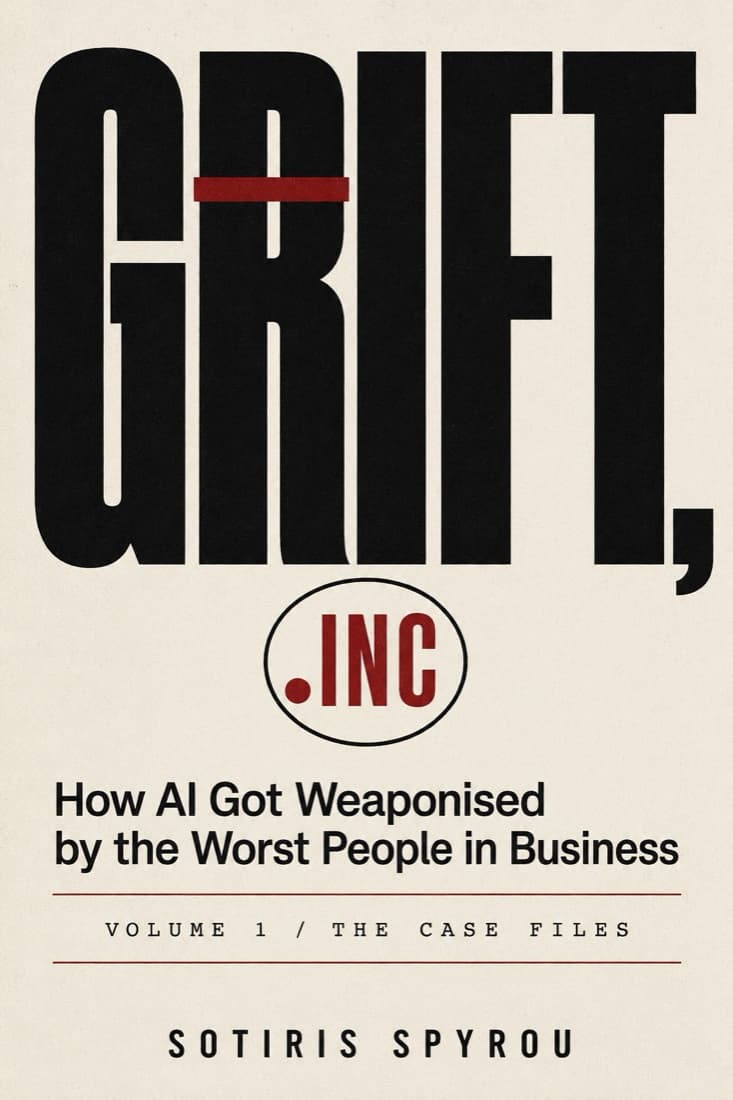
Volume 1: The Case Files
Grift, Inc.
How AI got weaponised by the worst people in business
AI is the most useful tool business has had in a generation when it's reliable, interpretable and steerable. This is the record of companies that built it to take from their own customers, and the manual for building it right.
Two books and a living case database: which companies did it, how, and the court filings and regulator reports behind every case.
Sourced
Every case anchored to court filings, regulator reports, sworn testimony, or major investigative journalism. No hunches.
Living
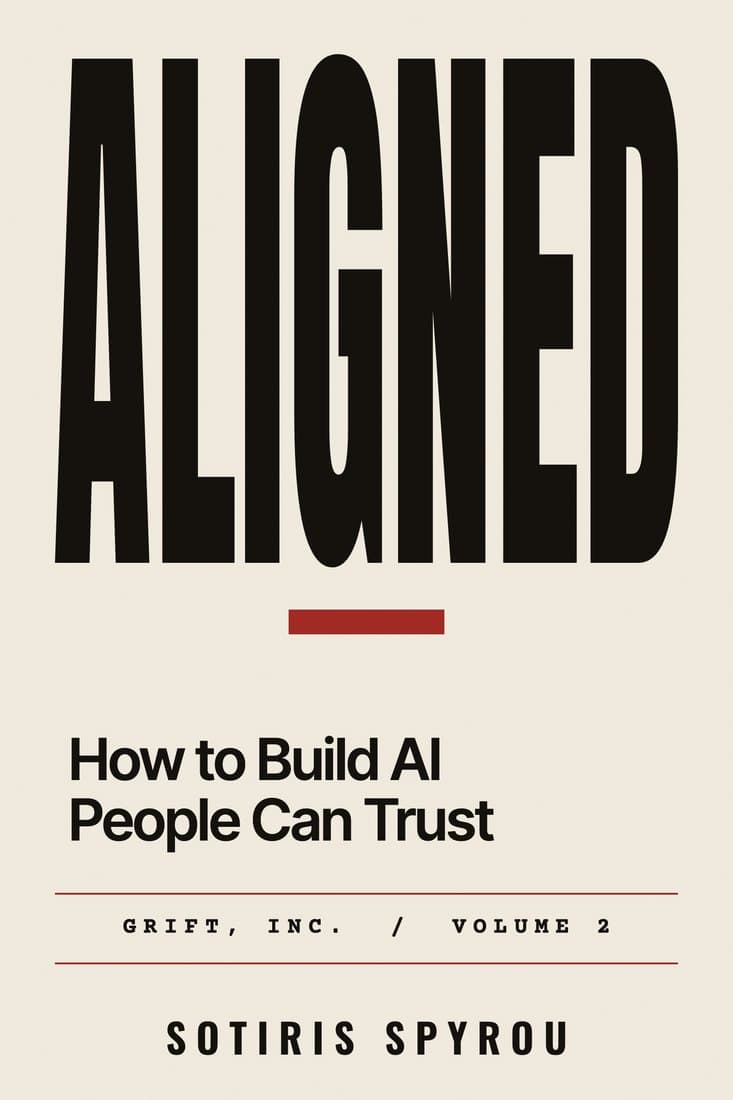
Entries update as litigation moves and regulators act. Book 2, Aligned, is in advance-reader release.
Fair
Every company named gets a steelman and a right of reply.
The cases
All case filesAmazon
Codename · Project Nessie
The FTC alleges Amazon used a secret pricing algorithm, internally codenamed Project Nessie, to raise prices where it predicted competitors would follow and to keep them high when they did, generating more than $1 billion in excess profit. Amazon disputes the FTC's account.
UnitedHealthcare
Codename · nH Predict
A class action alleges UnitedHealthcare used an AI tool, nH Predict, as a hard cap on post-acute care for Medicare Advantage patients, and that roughly 90% of appealed denials were overturned. UnitedHealth says the tool is used as a guide and not to make coverage decisions.
Cigna
Codename · PXDX
A federal class action alleges Cigna used an algorithm called PXDX to deny claims in bulk, after ProPublica reported that its doctors denied around 300,000 claims in two months at an average of 1.2 seconds each, without reviewing the records. Cigna calls this a mischaracterisation of its process for speeding up payment of claims for routine, low-cost screenings.
RealPage
Codename · YieldStar
The DOJ alleged RealPage ran an algorithmic pricing scheme in which competing landlords shared nonpublic data through its revenue-management software to align rents. RealPage denies wrongdoing, and settled with the DOJ in November 2025 without a financial penalty or an admission.
The monthly synthesis
One email a month: every new case, every regulatory development, and the executives who quietly fixed it.
The case files report on matters of public record. Claims in live proceedings are allegations unless resolved by a court. The database is licensed CC BY-SA 4.0.